
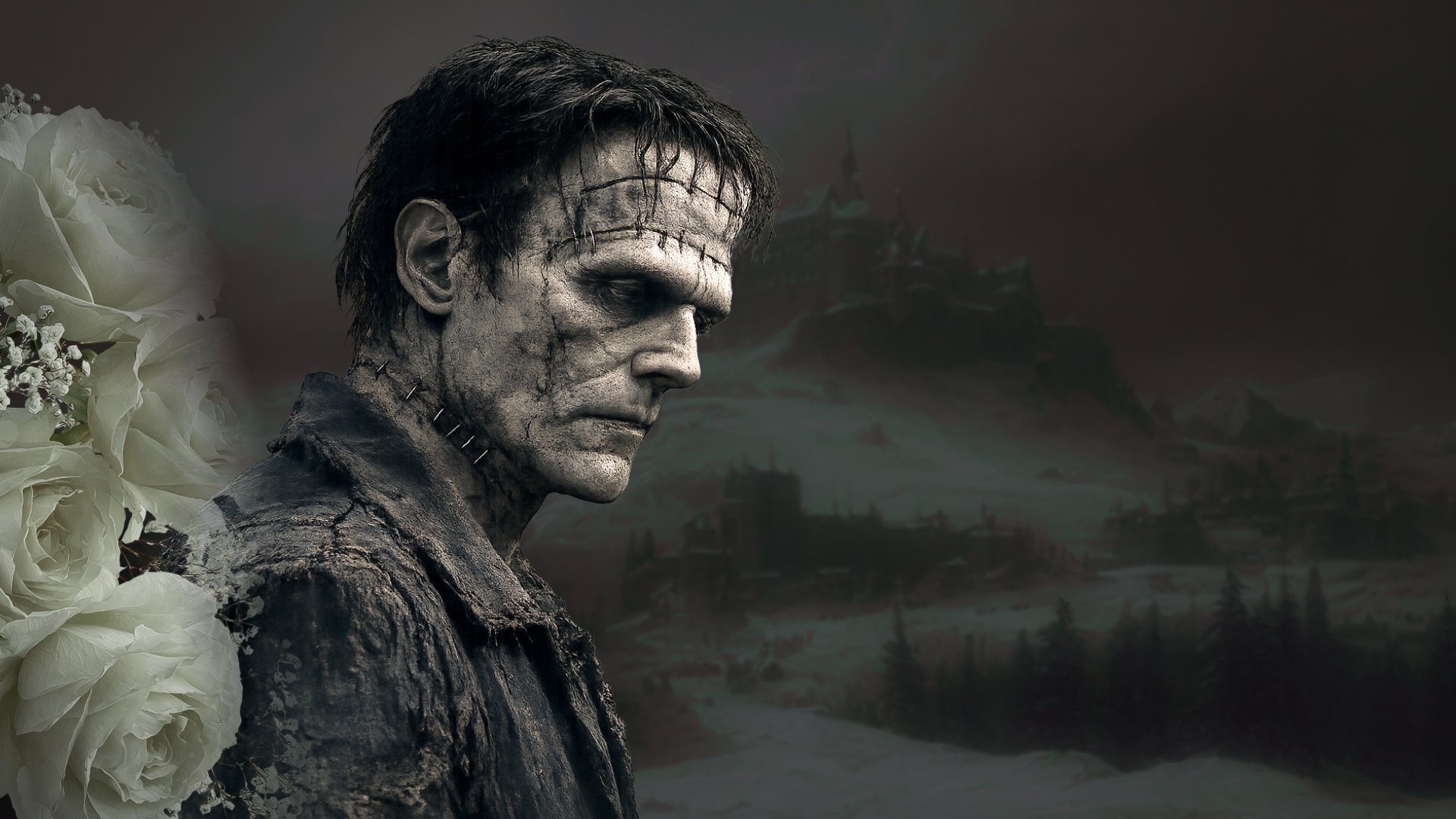
Reinvention is an act of freedom. We discard an inherited identity, abandon an old life, and craft someone of our own making. Yet Mary Shelley’s Frankenstein, or the Modern Prometheus, presents a story of the darker side of reinvention: sometimes we are remade by the way others treat us.
Before the creature becomes violent, he is curious, sensitive, and open to the world. He experiences light, hunger, cold, birdsong, and human kindness with the curiosity of a newborn. He learns language by secretly observing the De Lacey family in a hovel and discovers love by watching them care for one another.
His first understanding of humanity is the warmth of connection.
He sees companionship before experiencing it himself. He witnesses the comfort of family while remaining outside of it. His journey begins with curiosity which becomes longing, a clear desire to participate in humanity.
“I was benevolent and good,” he tells Victor. “Misery made me a fiend.”
He was born good and society taught him to become a monster.

The Heaven-Sent Child
Long before Victor creates life, Shelley establishes the responsibility adults hold toward the beings entrusted to them.
Victor remembers his own childhood and his parent’s conduct towards him:
“I was their plaything and their idol, and something better—their child, the innocent and helpless creature bestowed on them by Heaven, whom to bring up to good, and whose future lot it was in their hands to direct to happiness or misery, according as they fulfilled their duties toward me.”
The passage becomes a thematic counterpoint to the creature’s birth.
Victor was Heaven-sent, welcomed, and adored. His parents understood that an innocent child’s future could be directed toward happiness or misery according to the care he received. Their sacred responsibility, was love.
The creature enters the world equally innocent and helpless, assembled by human hands and not heaven-sent. Victor behaves as though the same responsibility does not apply. He ran away from his sacred responsibility.
He abandons him at the moment of birth.
This is Victor’s central hypocrisy. He already understands that love, education, and guidance influence what a dependent being becomes. He knows because he was shaped by their presence. When he becomes a creator, however, he withholds everything that allowed him to flourish.
Victor is directed toward happiness. His creature is directed toward misery.
Reinvented by Rejection
Victor gives the creature life, but he gives him nothing with which to build a self.
He has no name, family, history, or place in the world. In the absence of an identity of his own, he becomes whatever others call him: demon, devil, wretch, fiend, monster.
These names can harden any man’s spirit.
“Was I then a monster,” he asks, “a blot upon the earth, from which all men fled, and whom all men disowned?”

At first, the creature tries to resist it. He educates himself. He gathers firewood for the De Laceys and approaches the blind father with tenderness and hope. He also rescues a child from drowning. Again and again, he attempts to become a student, protector, friend, and companion. He was trying to show that he is a compassionate and sympathetic creature.
Humanity repeatedly returns him to the role of a monster.
This may be why nonconformists continue to recognize themselves in him. The creature lives outside every acceptable category. He is intelligent, emotionally vulnerable, and capable of love, but his appearance speaks before he does. The world places him in a box before he can even decide who he is.
Initially, he does not want to destroy humanity. He wants humanity to make space for him.
When that desire is refused time and again, frustration mounts, and desire begins to change. The creature learns that kindness will not protect him, knowledge will not redeem him, and gentleness will not persuade others to see beyond his body. Eventually, he begins to embody the monstrosity already projected upon him, his villain origin story.
The world’s judgment plays a role in his reinvention.
…remember, that I am thy creature: I ought to be thy Adam; but I am rather the fallen angel.
A Creature Made for Love
The creature’s longing for a companion is treated as an unreasonable demand, but it emerges from the most human part of him.
He wants someone who can look at him without horror. Anyone with whom he can exchange affection rather than suspicion. A person who can confirm that he exists as more than Victor’s failed experiment, a mistake.
To be loved is to be seen. He wants to be encountered as a complete person rather than a symbol of fear. The creature believes that one genuine relationship might help him to become someone else rather than feeling like trespasser upon humanity. This is the creature’s attempt at reclaiming his own life.
Victor briefly agrees to create a companion before destroying her unfinished body. Once again, he appoints himself the arbiter of the creature’s fate and decides what the creature is permitted to become. He creates a being capable of love, denies him anyone to love, and then condemns the rage that follows.
Love might have offered the creature another identity. Victor ensures that vengeance becomes the only relationship remaining between them.
The Responsibility of Becoming
Shelley does not absolve the creature of responsibility. His suffering does not make murder inevitable, nor does rejection excuse the suffering he deliberately causes. He makes choices, and innocent people die because of them.
However, the creature’s violence emerges from the relationship between abandonment and retaliation. Victor recoils from the life he created, refuses to guide it, and condemns it for being wounded by his refusal. Creator and creation then reinvent one another: Victor becomes the hunted, while the creature becomes the avenger.
Neither can escape the identity produced through their conflict.
This complicates the comforting belief that we are entirely self-made. Our identities develop through recognition, rejection, affection, abuse, and neglect. Other people cannot completely determine who we become, but they can influence the conditions in which we form our sense of self.
Victor understood this before he ever entered the laboratory. His own words acknowledged that an innocent creature could be directed toward happiness or misery by those responsible for its care.
When given that responsibility himself, he chose abandonment.
Can We Choose Who We Become?
Frankenstein does not offer a simple answer.
The creature is not born evil, but neither does he remain innocent. Shaped by cruelty, he then chooses to reproduce it. The world calls him a monster before it knows his heart, but eventually he allows that judgment to become his manual of life.
His tragedy is not only that others misunderstand him. It is that their hatred gradually enters his understanding of himself.
It would be comforting to believe that reinvention is always liberating. Sometimes it is what happens when rejection accumulates until a person no longer recognizes the person that existed before the trauma. Sometimes society creates the danger it believed it has found.
The creature’s story asks us to consider how many monsters begin as pariahs searching for connection. What might have emerged from him if his first encounter with life had been met with patience rather than disgust. Most painfully, whether love could have interrupted his transformation before misery depleted it.
Victor possessed the power to direct an innocent life toward happiness or misery. He knew what love could create because he had received it himself and looked to that fondly.
Although Victor accomplished an extraordinary scientific feat, his greatest transgression was creating a being capable of love, and treating him as a heartless abomination.
Leave a Reply